


Citizen Dialogue
Sebastian Clausen, Traffic Planner, City of Bern
«First-class validation!»
In Swiss cities, everyone wants to live and reside well. That's why the population desires traffic-calmed streets and shared spaces. Traffic planner Sebastian Clausen in Bern wanted to know exactly what people thought, invited residents of the Wyler neighborhood to an online dialogue – and listened carefully.
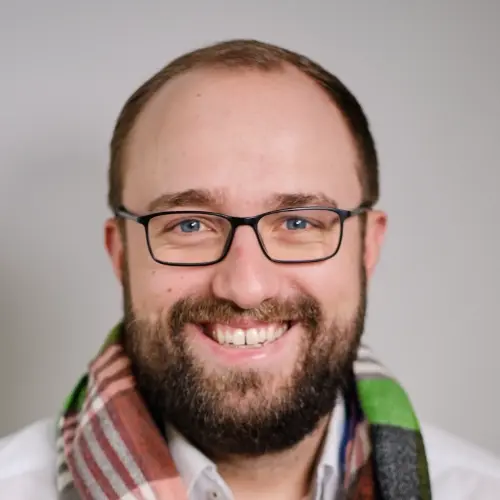
Mr. Clausen, you are a traffic planner in Bern. What problem were you facing?
We were given the mandate by the local government to establish a large shared space zone in the Wyler neighborhood.
In the past, we realized that what we were really missing in large-scale projects was the participation process. We had planned two neighborhood walks with the residents, but we also wanted to reach people digitally.
How did you put that into practice?
Each of the neighborhood walks had around 25 participants – in a district where roughly 2,500 people live. In contrast, 141 people joined the online dialogue. What was particularly encouraging was that the participants represented all age groups. We also have many students in the neighborhood, and they took part as well. Later, we saw that the online dialogue reflected the population distribution much better than the walks. Only 12 out of the 141 participants had also attended the walks.
So, a broader foundation.
Yes, it’s clear: physical participation alone is not enough. But for digital participation to work, you really have to be committed.
What were your experiences with BrainE4?
It was obvious that many people really enjoyed the playful approach with BrainE4. It was completely different from a traditional survey, where you lose interest the moment you even see it. The gamification aspect was very well received.
«VMany people thought the playful approach with BrainE4 was really cool.»
The fact that people could submit their own ideas and suggestions was very important. This way, we knew what residents wanted and what was on their minds – we truly listened.
Personally, I would like to see the developers enable map integration, so that the ideas submitted by users can also be assigned to specific locations.
What surprised you?
During the neighborhood walks, we identified locations and topics that concerned the residents. At the same time, the online dialogue was already running, and we immediately entered this information as ideas and opinions into the web app. This allowed those who weren’t present to comment on them as well – and we instantly received feedback from the larger group of participants. BrainE4’s ranking system confirmed the views of the smaller group. An excellent validation!
Doesn’t it disappoint you that there were no real surprises?
Not at all. As a planner, you need clarity and confirmation from the community. That’s extremely valuable.
What was challenging?
An important learning was that BrainE4 reaches its full potential when people are actively and directly approached and motivated through flyers and other initiatives. The design of the flyer must absolutely not look like advertising – it has to have an official appearance.
«We learned what people wanted and what was on their minds.»
At the start of the online dialogue, you also provided your own hypotheses for evaluation. What was your experience with that?
BrainE4 is truly innovative. We didn’t immediately see all the new possibilities the system offered. That’s why our initial hypotheses weren’t as meaningful as they could have been. In a second online dialogue, we would definitely be able to leverage its potential even better.
1/2


What would you do differently?
We would test our own hypotheses more thoroughly from the very beginning. However, we received excellent support from the BrainE4 team, which allowed us to adapt and extract a lot of valuable information.
Are there any decisions you made as a result of this online dialogue?
Yes. It became clear that there are actually five different locations in the neighborhood where we will implement test measures before rolling out the shared space zone. We based this on the data we received. We focused on what made it into the top five of the idea ranking.
«I believe BrainE4 would also work very well for smaller cities.»
What is your conclusion?
That it is absolutely essential to have a digital tool that is seamlessly and well-coordinated within the participation process. In our next participation project, we will definitely need it again.
Who would you recommend BrainE4 to?
When it comes to collecting ideas and suggestions and discovering insights through a playful approach, it can be used in a wide range of sectors. I also believe it would be very effective for smaller cities. Often, there’s just one planner handling all traffic-related issues, and BrainE4 can definitely provide strong support in such cases.
Interview: thk
Online Dialogue:
6
open questions
141
Interviews
269
ideas and arguments
10,820
idea battles
Fact and Contact:
City of Bern, Traffic Planning:
Wyler neighborhood: approx. 2'000 adults
Traffic planner:
Sebastian Clausen
Tel: 031 321 70 49
Mail: sebastian.clausen@bern.ch
2/2

100% Swiss Made
Copyright © 2026 BrainE4