



Peppino Beffa, Mayor of Schwyz«With the digital Landsgemeinde, we reached 11.2% of the population»
On 15 December 1847, the last cantonal Landsgemeinde took place in the canton of Schwyz. Almost 180 years later, the municipal council of Schwyz took a bold step: with the first «Digital Landsgemeinde» of central Switzerland, the politicians invited the population to actively shape the future of the municipality. Over 11% of residents took part, contributed 1,772 ideas and prioritised them interactively among themselves. Mayor Peppino Beffa is impressed by the significance of the results achieved.
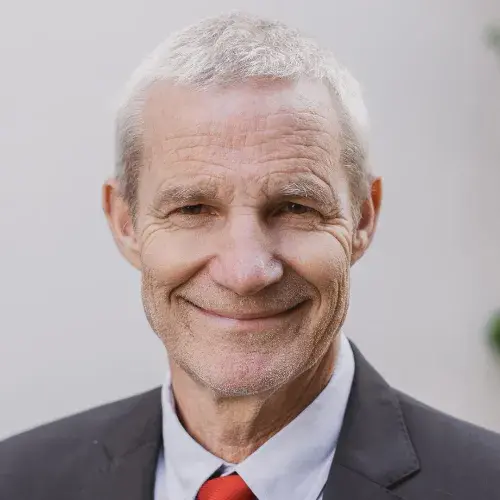
Mr. Mayor, what problem were you facing last summer?
Over the next 5 to 10 years, the municipality of Schwyz faces major spatial changes, such as the recently launched land-use planning revision with internal densification, strong population growth and the soon-to-be-vacated cantonal site in the centre of the village. At the same time, a popular initiative was announced demanding 40% affordable housing. We wanted to understand what the population of the municipality really wants, in order to set the right course for the future.
BrainE4 is still hardly known. How did you get in contact?
I came across the website last year and discussed it with our external project leader Franz-Xaver Strüby. We really liked the principle of BrainE4: open questions and the opportunity to submit ideas.
«We were able to debunk concrete myths.»
There must have been concerns.
Yes. There was initially some hesitation in the municipal council, as open questions might raise too many demands – a classic wish list. But as a body, you simply have to be aware that in the end you also need the courage to say no. The municipal council had this courage, and ultimately the process moved surprisingly quickly.
«The whole process moved surprisingly quickly.»
How does this digital participation differ from your previous methods?
I have been on the municipal council for 14 years. We have various commissions that deal with the future. We also held workshops with the political parties, for example. But this only ever reaches the same selected circles. Anyone who is not in a party is left out. With BrainE4, we reached a sensational 11.2% of the population. People sometimes spent two hours intensively clicking through the duels.
Was there no criticism?
Yes, a few voices said that only left-wing and green supporters would take part. But that is precisely the task of the municipal council – to interpret the results correctly. Furthermore, we still have the democratic brake: implementation requires financial resources. For every major budget item, we have to go to the municipal assembly or to the ballot box.
«BrainE4 creates acceptance.»
What was the most surprising result for you?
There was a healthy humility. In analogue workshops, everyone sticks their idea on the wall and thinks it will be implemented. Here, citizens see in black and white where their idea ended up. That creates acceptance. In addition, some of our own proposals from the municipal council were pushed to the back – we took that in good sport. The canton wanted mainly commercial space, but the people, for example, want apartments for multiple generations, a café and a parking garage on the Bahnhofstrasse site. With this measurable popular will, we can now approach the canton in a completely different way.
What were the reactions from the population?
There was nothing negative. People got involved enormously.
During the process, you also had to coordinate with the district?
Yes, the district of Schwyz, as the owner of the main square, wanted to launch its own survey on the main square. In that phase, we were able to incorporate the district's hypotheses into our process in order to gauge those needs as well.
«The decision matrix is worth its weight in gold for us politicians.»
You surveyed the population twice: first, people could submit and prioritise ideas in open questions. The second dialogue was closed and more specific. What was the benefit of the second dialogue?
We were able to debunk concrete myths. Pet projects demanded by individuals were sometimes flushed far down in the population's prioritisation. Now we can say with solid evidence which needs have broad support.
1/2

What is your personal conclusion?
The entire report, and especially the decision matrix, are worth their weight in gold for us politicians. You can immediately see which projects are in the green zone and should pass at the ballot box without resistance – and which projects are better buried. The tool definitely has something that others don't have.
«The tool definitely has something that others don't have.»
Who would you recommend BrainE4 to?
At the municipal level, it has proven itself very well. Anyone who has the courage to be open, can provide sufficient resources, can also say "no" to individual pipe dreams and look the truth in the eye, will obtain first-class data with it.
Interview: thk
Online Dialogue:
4
open questions
1,345
Interviews
11
%
participation rate
1,772
ideas and arguments
170,572
idea duels
Contact:
Peppino Beffa
Tel: +41 41 819 07 11
Mail: gemeindekanzlei@gemeindeschwyz.ch
2/2